


An internationally renowned entertainment brand faced a challenge very similar to the one currently facing many tourist destinations: having an attractive proposal does not guarantee that the public will end up choosing it.
Although the activation did not belong to the tourism sector, its approach allows for lessons to be drawn that are directly applicable to destination promotion, especially in a context marked by:
- High competition for attention.
- Users saturated with digital impacts.
- A key reality: by the time the user starts searching, a significant part of the decision has already been made.
There was, therefore, a critical unresolved question:
How do you generate interest before active intent even exists?
The challenge did not consist solely of appearing during the search moment, but of influencing the decision before the user reached that point. To do this, it was necessary to:
- Capture attention outside the digital environment.
- Integrate into the user’s routine.
- Generate a memorable experience.
- Create an emotional connection with the content.
- Transform that connection into real interest.
The starting point was understanding that demand is not just captured: it is also built.
Experiential Marketing in the Madrid Metro
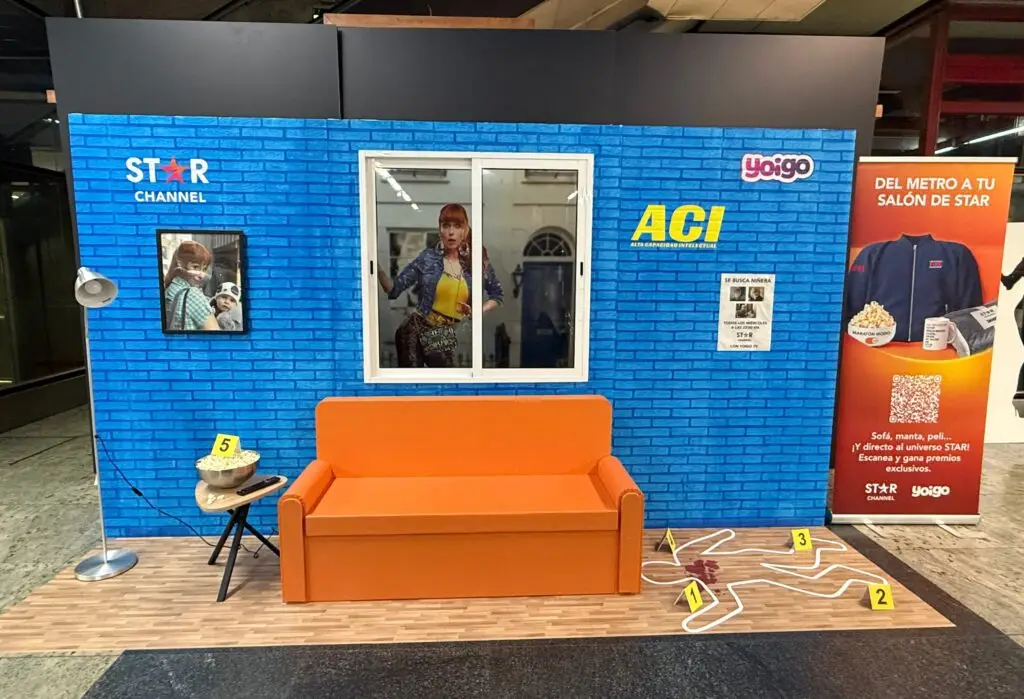
To address this challenge, an experiential activation was developed in the Madrid Metro, one of Spain’s busiest spaces and with a high concentration of the target audience.
The strategy sought to move the brand’s content outside of digital channels and integrate it into an everyday environment for users.
Immersive experiences to capture the public's attention
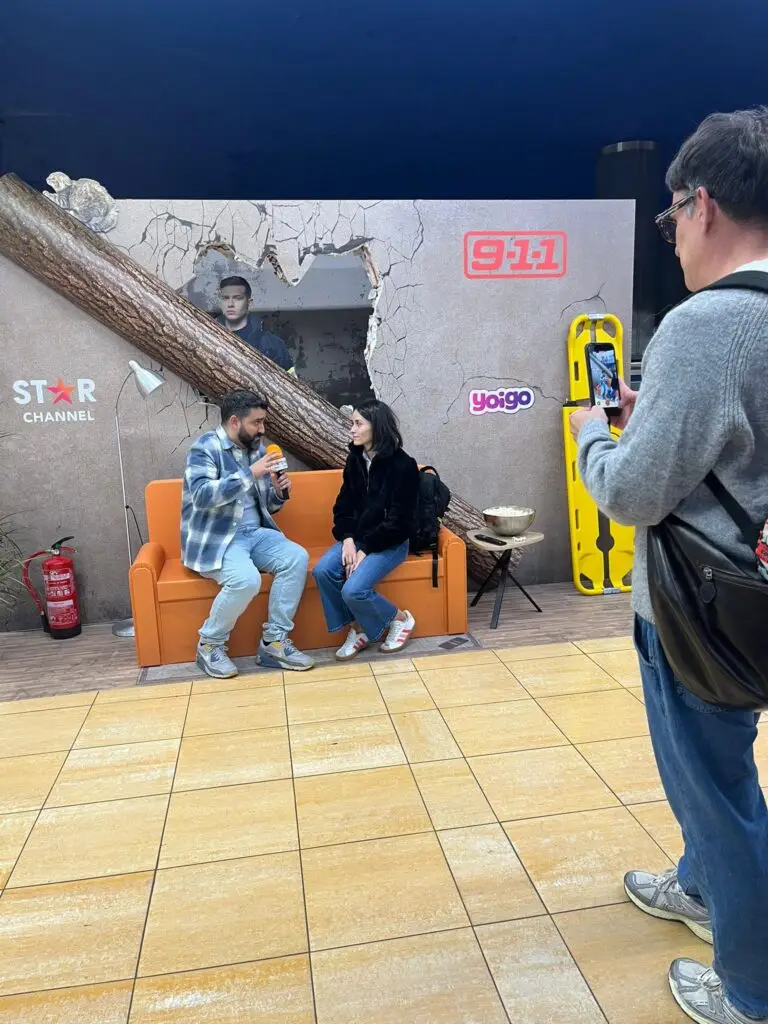
Strategic stations with a high volume of travelers were selected and transformed into immersive settings linked to the brand’s content. In this way, a common transit space became an experience capable of surprising the user, sparking their curiosity, and generating a more direct connection with the content.
Integration of physical actions and digital channels
The activation combined different physical and digital touchpoints:
- Physical intervention in key Madrid metro stations.
- Immersive scenarios that brought the content into the real world.
- Direct interaction with users through dynamization actions.
- Participatory mechanics via QR codes connected to the digital environment.
- Presence on advertising displays within the metro itself.
- Campaign amplification through social media content and creators.
From impact to action
The activation succeeded in generating interest in the content outside its usual digital environment and establishing a more direct relationship with the target audience.
Among the main results of the strategy, the following stood out:
- Increased interest in content outside the digital environment.
- High direct interaction with the target audience.
- Amplification of impact across digital channels.
- Reinforcement of brand positioning in the user’s mind.
However, the true value of the action was its ability to influence before the decision was made.
This integration allowed the experience to extend beyond the stations and accompany the user from the first impact to the brand’s digital channels.
Each touchpoint was designed to move the user forward within a specific journey:
IMPACT – INTERACTION – CONNECTION – INTEREST – ACTION
This approach allowed a transit space to be transformed into an active channel for demand generation.
Results of an experiential marketing campaign
The activation succeeded in generating interest in the content outside its usual digital environment and establishing a more direct relationship with the target audience.
Among the main results of the strategy, the following stood out:
- Increased interest in content outside the digital environment.
- High direct interaction with the target audience.
- Amplification of impact across digital channels.
- Reinforcement of brand positioning in the user’s mind.
However, the true value of the action was its ability to influence before the decision was made.
How to apply experiential marketing to tourism promotion
The approach of this activation responds directly to one of the great challenges of tourism promotion: arriving too late to the traveler’s decision process.
Today, the traveler does not choose from all available destinations. They choose from those they already know, remember, or have in mind when they start organizing their trip. For this reason, the destinations with the greatest capacity to generate demand are not only those that appear during the search, but those that manage to position themselves in the traveler’s mind before a specific intention exists.
Positioning a destination before the search moment
Applied to tourism, experiential marketing allows the identity and attributes of a destination to be transferred to source markets through actions capable of sparking public interest.
This approach can be used to:
- Activate the destination in strategic source markets before the search begins.
- Generate tourism inspiration in real and everyday contexts.
- Building an emotional connection prior to the decision.
- Give visibility to the culture, gastronomy, heritage, or experiences of the territory.
- Feed the digital funnel with users who already show a greater predisposition toward the destination.
Experiential marketing to promote tourist destinations
At MADISON Travel & Tourism, we create unique user-centered events and experiences designed to integrate naturally into their environment and generate a real connection.
We integrate creativity, strategy, and intelligence to position destinations before the moment of search and transform that positioning into real results.
If you want to stop competing only in the final phase of the funnel and start influencing the decision from the beginning, we can help you design a strategy adapted to your objectives.