


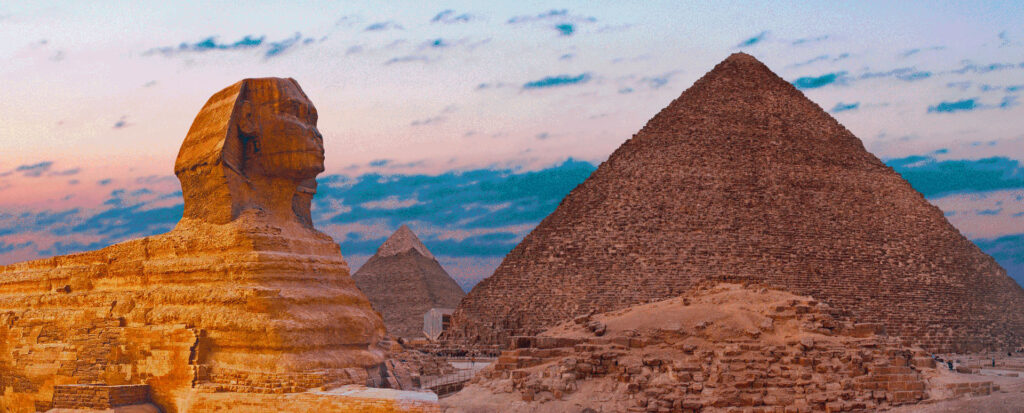
Heritage is more than just an inheritance from the past; it is a living asset that drives the economic, social, and cultural development of territories. When managed with a strategic vision, it becomes a driver of competitiveness capable of redefining the positioning of tourist destinations, projecting them internationally, and generating more sustainable, conscious, and connected tourism.
The study Uncovering the impact of cultural heritage on economic growth: empirical evidence from Greek regions” (2024) demonstrates that cultural heritage has a significant impact on regional economic growth, particularly through the tourism demand channel. For example, they found that a greater endowment of heritage is associated with regional GDP growth.
In addition, the United Nations Educational, Scientific and Cultural Organization (UNESCO) points out that heritage offers a key platform for sustainable development, as the 2030 Agenda already incorporates the cultural dimension. The association between tourism, culture, and local development is increasingly explicit: “cultural tourism is one of the largest and fastest-growing global tourism markets”.
The recent example of the Grand Egyptian Museum (GEM) clearly illustrates this transformative power. Its inauguration has marked a turning point in the history of Egypt, not only because of its cultural magnitude but also because of its economic and urban impact. This complex—considered the largest archaeological museum in the world dedicated to a single civilization—symbolizes how heritage, when combined with innovation and digitization, can revalue a destination and revitalize its economy.
An Impulse that Goes beyond Culture
According to the Egyptian Government Information Service (SIS), the GEM is expected to attract up to five million visitors annually, generating a constant flow of tourism throughout the year. In addition, the Egyptian government estimates that the country could reach 30 million international visitors in 2028, double the 15.7 million registered in 2024.
This growth not only strengthens the tourism economy but also drives job creation, the development of new infrastructure, the revitalization of local services, and the improvement of the quality of life of nearby communities. The opening of the museum has given rise to a new urban center in Giza, where heritage acts as a catalyst for economic and social regeneration.
The Fusion between Heritage and Modernity
Located next to the Giza pyramids, the GEM was designed by Heneghan Peng Architects with a monumental limestone structure that reflects the triangular shapes of the pyramids. But its value is not limited to aesthetics: the building is a symbol of the union between ancient heritage and technological modernity.
The museum houses more than 100,000 archaeological pieces, including the complete collection of Tutankhamun, restored in state-of-the-art laboratories. However, its most innovative bet lies in the use of digitization to enrich the visitor experience.
According to National Geographic Historia, the GEM “integrates augmented reality, immersive environments, and digital tools that allow visitors to explore the history of Egypt with a contemporary perspective.” These technological experiences not only facilitate the interpretation of heritage but also make it more accessible, educational, and attractive to new generations of travelers. In addition, the GEM incorporates digital heritage management systems that document and preserve each piece, guaranteeing long-term conservation and access to information from anywhere in the world.
Digital Heritage: a New Way of Traveling
The case of the Grand Egyptian Museum reflects a global trend: the digitization of heritage as a tool to reinvent tourist destinations. From augmented reality to virtual tours, interactive environments, or cultural innovation laboratories, technology is making it possible to bring history closer to the modern traveler, improve the visiting experience, and expand the emotional connection with destinations.
This integration between heritage and technology is generating a new tourism economy, based on creativity, sustainability, and participation. A model that combines the conservation of identity with innovation, capable of attracting more diverse audiences and prolonging interest in destinations outside of traditional seasonality.
Inspiration for the Transformation of Destinations
The GEM is not only a benchmark for Egypt but also an inspiring example for other destinations seeking to revalue their heritage as an engine for growth. The key is to understand heritage not as a static resource but as a development platform that unites culture, economy, innovation, and experience.
At Madison Travel & Tourism, we believe in this transformative power. We accompany tourist destinations in the design of strategies that integrate heritage, culture, digitization, and sustainability, with the purpose of creating unique, competitive experiences with a positive impact on the territory.
Because heritage not only tells the story of a place: it activates its present and projects its future.
Sources Consulted
Egyptian State Information Service (SIS):
“Celebration of the inauguration of the Grand Egyptian Museum”: https://sis.gov.eg/es/centro-de-informacion/eventos/celebraci%C3%B3n-de-la-inauguraci%C3%B3n-del-gran-museo-egipcio/ and “SIS: hundreds of millions followed the inauguration of the Grand Egyptian Museum”.
National Geographic Historia:
“Everything we know about the opening of the Grand Egyptian Museum”, published in historia.nationalgeographic.com.es.
Study “Kostakis, I., Lolos, S. Uncovering the impact of cultural heritage on economic growth: empirical evidence from Greek regions, 2000–2019. Ann Reg Sci 73, 1209–1239 (2024). https://doi.org/10.1007/s00168-024-01280-3” (2024)
United Nations Educational, Scientific and Cultural Organization (UNESCO)
at MADISON Travel & Tourism, Technology Has a Soul…
We combine Customer experience, data analysis, and digital signature to offer technological solutions that personalize and improve each contact with the traveler. Because what makes the difference… is how you make them feel.
It is no longer just about offering a comfortable bed, but about creating memorable experiences that emotionally connect with the guest. And AI, when well applied, is the tool that makes it possible.
Do You Want to Transform your Client’s Experience?
At MADISON Travel & Tourism, we help you design a technological strategy that turns each stay into a story that the traveler will want to repeat.